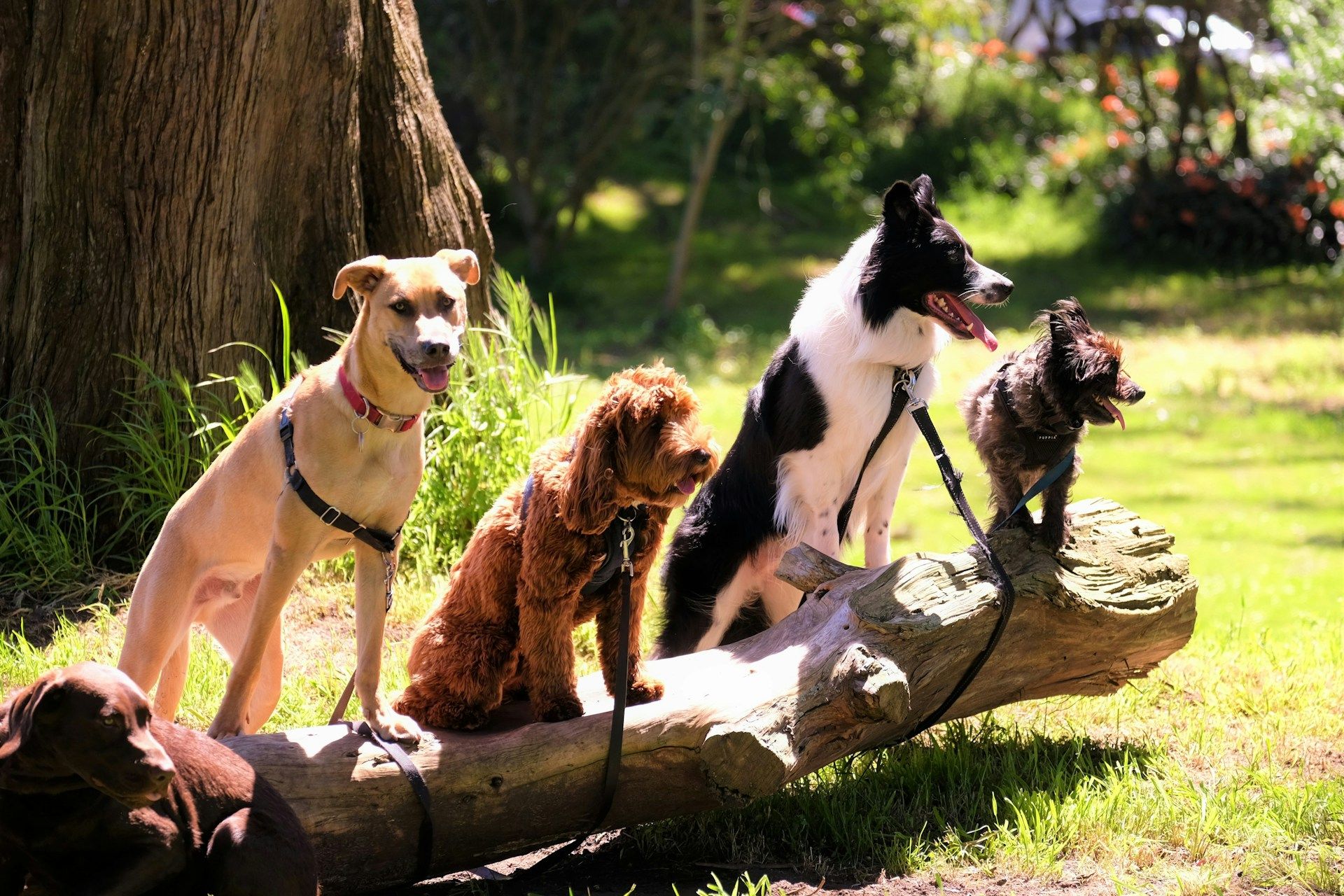
A brush that glides cleanly through a Greyhound's coat will barely skim the surface of a Husky's undercoat, and a trim that keeps a Poodle comfortable can permanently damage a Golden Retriever's fur. Knowing your dog's actual coat type takes the guesswork out of brushing, bathing, and seasonal care.
Most dogs fall into one of six main coat categories, though mixed-breed dogs often inherit a blend of two.
Smooth (Short) Coats
Smooth-coated dogs have a single, close-lying layer of short hair with no dense undercoat. Their coats look low-maintenance, but many still shed steady, bristly hairs year-round that weave into upholstery.
Common breeds: Greyhound, Doberman Pinscher, Beagle, Boxer, French Bulldog, Smooth Dachshund.
How to care for it: Run a rubber curry brush or grooming mitt over the coat once or twice a week to lift loose hair and distribute natural skin oils. Because thin coats offer little insulation, these dogs often need a jacket in cold weather and pet-safe sunscreen on sparse bellies or pale noses.
Double Coats
Double coats consist of two distinct layers: a soft, dense undercoat that insulates against both cold and heat, and longer, weather-resistant guard hairs on top that shed water and dirt. Double-coated dogs shed year-round and "blow" their undercoat heavily once or twice a year as seasons shift.
Common breeds: Siberian Husky, Golden Retriever, German Shepherd, Pembroke Welsh Corgi, Great Pyrenees, Pomeranian.
How to care for it: Brush several times a week (and daily during seasonal sheds) using a slicker brush and an undercoat rake or stainless steel comb to reach down to the skin without scraping it. Avoid shaving a double coat unless a veterinarian recommends it for a medical issue; shaving removes built-in temperature regulation and sun protection, and the coat can grow back patchy or coarse.
Long and Silky Coats
Long, fine, single-layered coats grow continuously or hang straight and flowing without a thick woolly underlayer. Because the strands are fine, friction quickly turns loose hairs into tight knots behind the ears, under collars and harnesses, and in the armpits.
How to care for it: Brush several times a week (or daily for floor-length coats) with a pin brush, then follow up with a metal greyhound comb to confirm no tangles remain near the skin. Lightly misting the coat with a dog-safe detangling spray before brushing helps prevent breakage and static.
Curly and Wavy Coats
Dense curls and soft waves trap dead hairs inside the coat instead of dropping them onto your floors. That makes these breeds low-shedding, though no dog is truly 100% hypoallergenic—pet allergies are triggered by proteins in dander and saliva, not fur alone. Because shed hair stays trapped, curly coats mat rapidly if brushing is skipped.
Common breeds: Poodle, Bichon Frise, Portuguese Water Dog, Lagotto Romagnolo, and many Poodle mixes.
How to care for it: Use a slicker brush in sections (often called line brushing) and check your work with a metal comb all the way to the skin at least three times a week. Plan on professional trims every four to eight weeks to keep the coat manageable and clear around the eyes and paws.
Wire (Harsh) Coats
Originally bred into working terriers and hunting dogs to deflect brambles and mud, wire coats feature coarse, dense outer hairs over a softer underlayer. They shed lightly and resist dirt better than softer coats.
Common breeds: Wire Fox Terrier, Border Terrier, Miniature Schnauzer, Airedale Terrier, Wirehaired Dachshund.
How to care for it: Brush two or three times a week with a slicker brush or comb to clear dead hair and prevent tangles in furnishings (the longer beard and leg hair). Traditional maintenance uses hand-stripping to pull dead hairs and preserve harsh texture and rich color; clipping is fine for pet dogs, though it gradually softens the coat over time.
Hairless Breeds
Hairless dogs have mostly exposed skin, sometimes with tufts of hair on the head, feet, and tail. Without fur as a barrier, skin care replaces brushing.
Common breeds: Chinese Crested, Xoloitzcuintli, American Hairless Terrier.
How to care for it: Bathe gently every week or two with a mild, fragrance-free dog cleanser to prevent clogged pores, moisturize dry patches with a vet-approved lotion, and protect exposed skin with pet-safe sunscreen in summer and soft sweaters in winter.
Quick Grooming Basics for Any Coat
Brush before bathing: Water tightens existing tangles into felt-like mats, so always detangle dry fur before stepping into the tub.
Use dog-formulated shampoo: Human shampoos are formulated for more acidic skin and can dry out or irritate a dog's coat.
Dry down to the skin: Leaving damp moisture trapped inside a thick or curly coat encourages hot spots and yeast overgrowth.
If you have a mixed-breed dog with an unusual coat blend, ask a groomer or veterinarian to show you which brush reaches the skin cleanly. Ten minutes with the right tool saves hours of detangling later.