Photo By Ayla Verschueren via Unsplash

Long walks burn physical energy, while focused brain work tires dogs out in a completely different way. Mixing mental enrichment with physical play reduces boredom, cuts down on destructive habits, keeps senior dogs sharp, and strengthens everyday obedience. Here are ten practical games you can rotate through indoors or in the yard.
1. Hide and Seek
Ask your dog to wait in one room (or have a family member hold their collar), walk into another room, and step behind a doorway or couch. Call their name once and reward them generously with praise or a treat when they find you. Start with easy hiding spots so your dog builds confidence before hiding in closets or behind curtains. Beyond being fun, hide and seek quietly sharpens your dog's recall and encourages them to track you by scent.
2. Puzzle Feeders and Stuffed Toys
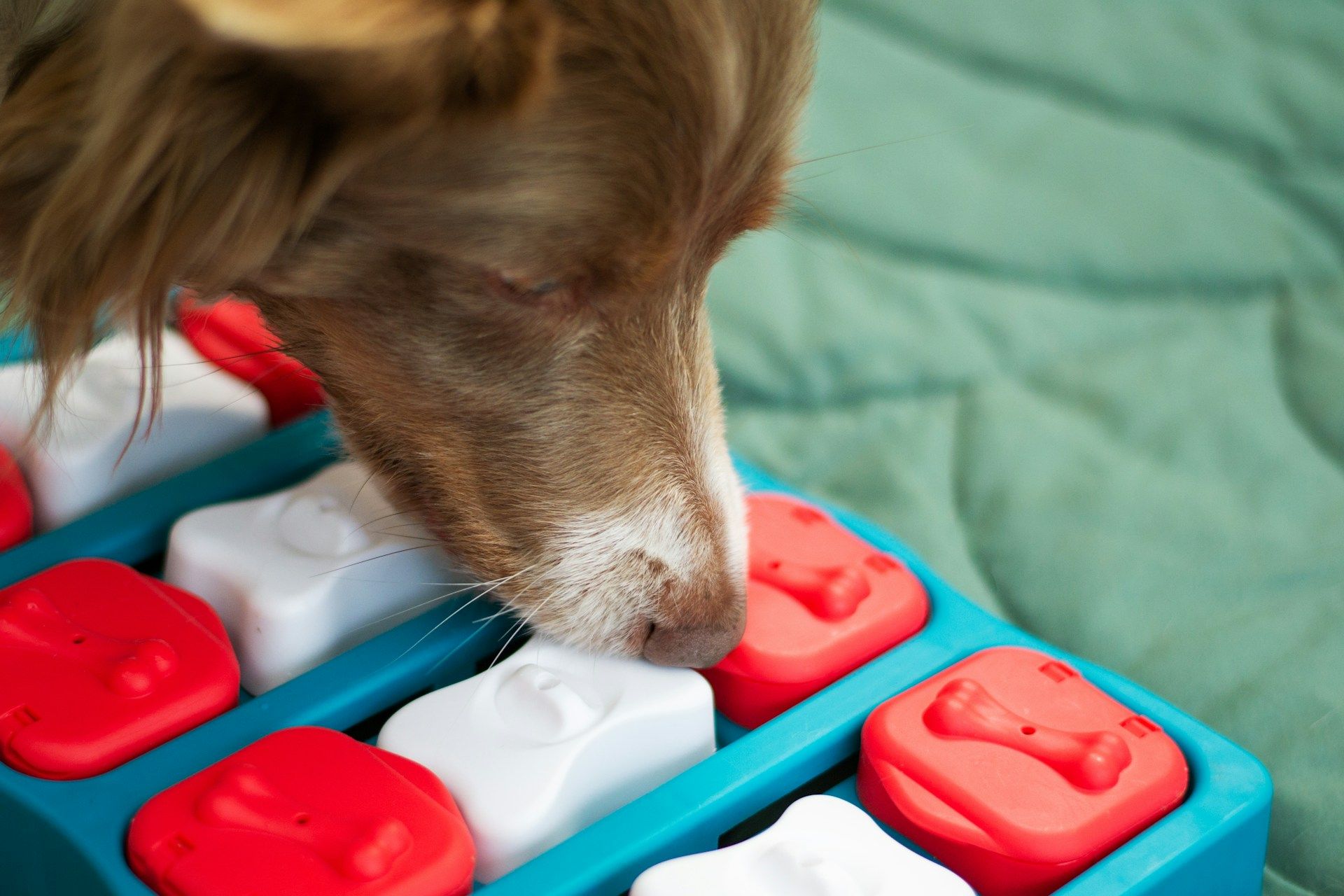
Turn ordinary meals into problem-solving sessions. Pack a rubber toy with kibble and a smear of xylitol-free peanut butter, scatter dry food across a snuffle mat, or drop kibble into the cups of a muffin tin and cover each cup with a tennis ball. Begin with simple setups so your dog does not get frustrated, then freeze stuffed toys or switch to multi-step puzzles as they improve.
3. Indoor or Backyard Obstacle Course
Use household items to build a low-impact agility course. Rest a broomstick across two low stacks of books to step over, drape a blanket over two dining chairs for a tunnel, or line up cones to weave around. Lure your dog slowly through each piece with treats before connecting them into a sequence. Keep obstacles flat or very low for puppies and senior dogs to protect developing or aging joints.
4. Structured Fetch
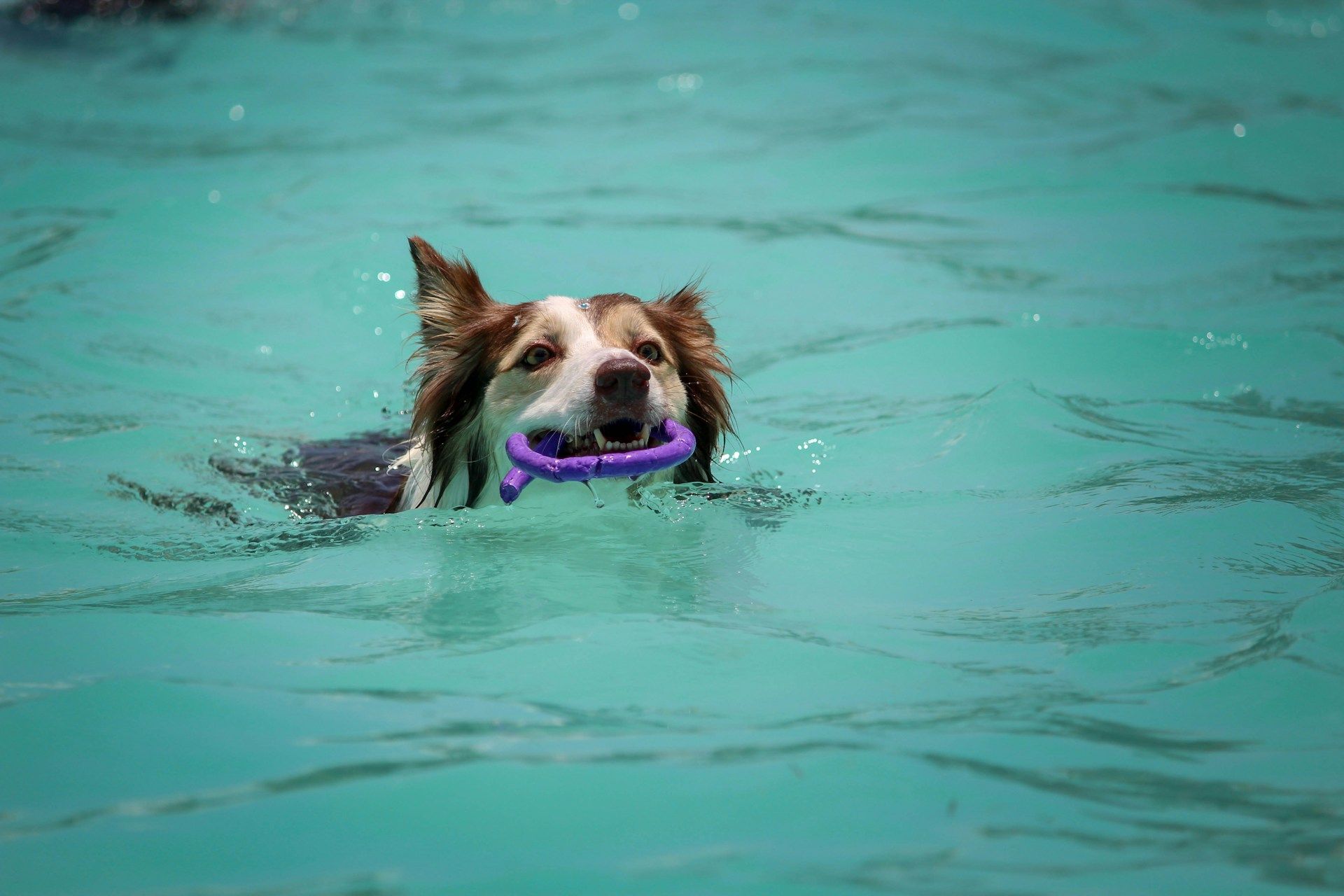
Add short thinking breaks to regular fetch instead of throwing nonstop. Cue a "sit," "down," or "wait" before every throw, or place two distinct toys in the yard and teach your dog to retrieve a specific one by name. Pausing between throws keeps arousal manageable, builds impulse control, and gives your dog's muscles a breather between sprints.
5. Find the Treat
Have your dog wait in another room while you hide five to ten aromatic treats along baseboards, on low rugs, and behind table legs. Open the door and give a release cue like "find it." Scent work engages a huge portion of a dog's brain and has a naturally calming effect, making this one of the best options for rainy days, high-energy breeds, and older dogs with limited mobility.
6. Tug-of-War with Clear Rules
Tug is a healthy outlet for natural prey drive when paired with simple boundaries. Use a long, soft rope or fleece tug toy, teach a reliable "drop it" cue by trading the toy for a treat, and pause the game immediately if teeth accidentally touch your skin. Let your dog win regularly—victory keeps the game rewarding and encourages them to bring the toy right back for another round.
7. Red Light, Green Light
Walk briskly with your dog on a loose leash or off-leash in a fenced yard ("green light"), then stop suddenly and cue a "sit" or "down" ("red light"). Reward quick responses with a treat and immediately release them back into motion. This game builds fast focus, teaches your dog to check in with your body movement, and translates directly to calmer walks.
8. Bubble Chasing
Head into an open yard or onto a non-slip rug and blow dog-safe, non-toxic bubbles (avoid standard dish soap, which irritates eyes and stomachs). Let your dog track and pop them mid-air. Keep sessions brief so excitable dogs do not twist awkwardly or overexert themselves chasing every bubble.
9. The Shell Game
Place a smelly treat under one of three opaque plastic cups while your dog watches, then encourage them to nose or paw the right cup to uncover the reward. Once they understand the pattern, slowly swap two cups before releasing them. This low-impact brain game builds patience, visual tracking, and scent discrimination in just a few minutes.
10. Place-to-Place Mat Game
Set two or three towels or dog beds across the living room. Lure or cue your dog to step onto a mat, lie down, and hold until you release them to the next spot. For a playful twist on musical chairs, put on music while walking around the room together and cue your dog to settle on the nearest mat whenever you pause the track. It is an easy way to practice impulse control around distractions.
Matching Games to Your Dog
Keep play sessions short (five to ten minutes is plenty for mental games) and end while your dog is still eager. Always adapt speed, surface traction, and jumping height to your dog's age and physical condition, especially for young puppies and older dogs.